WhatsApp Trigger
The WhatsApp Trigger allows your AI agent to respond automatically when users send messages on WhatsApp.
It enables you to build conversational agents for customer support, FAQs, lead qualification, order tracking, and guided workflows—directly inside WhatsApp.
This trigger integrates with Meta’s WhatsApp Business API and works entirely through secure webhooks.
Overview
When a WhatsApp message is received:
- Meta sends the message event to your webhook
- The WhatsApp trigger activates
- Message context (sender, content, metadata) is created
- Your agent executes its instructions
- The agent can reply back to the same WhatsApp conversation
Each user's incoming message is handled independently, while still allowing you to maintain conversational continuity.
When Should I Use WhatsApp Trigger?
Use this trigger when:
- Users should interact with your agent via WhatsApp
- Conversations happen in real time
- Human-like responses are required
Common use cases
- Customer support & helpdesk
- FAQ automation
- Lead qualification
- Order updates & tracking
- Appointment booking
- Conversational onboarding
Configure WhatsApp Trigger
Step 1: Add WhatsApp Trigger
- Go to DronaHQ → Agents → Triggers
- Click + Add Trigger
- Select WhatsApp
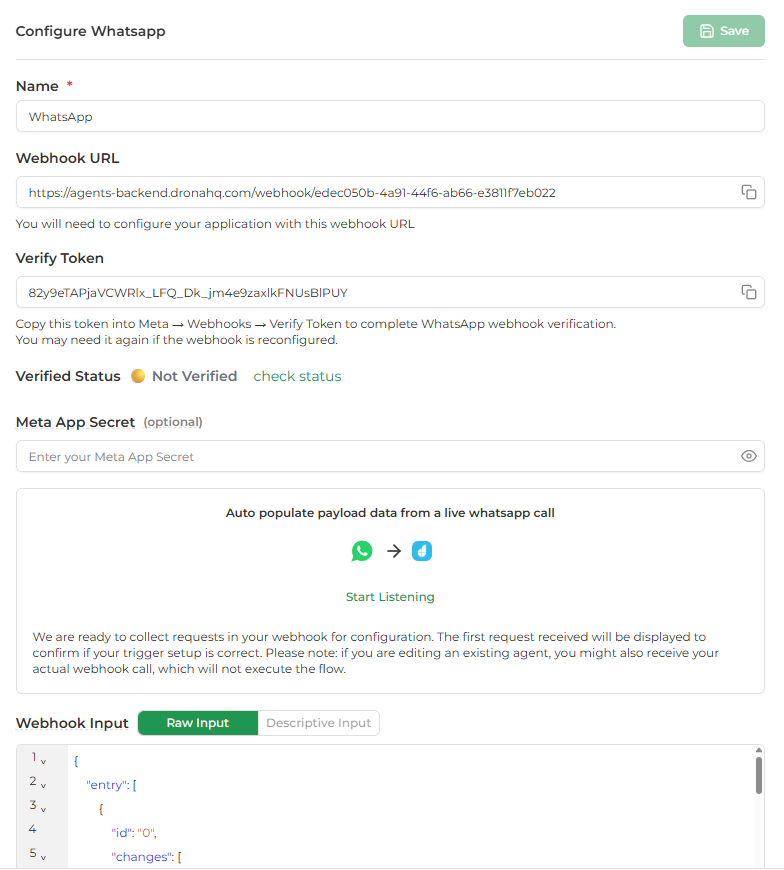
Step 2: Basic Configuration
Name
- Provide a descriptive name
Examples:Customer Support – WhatsAppOrders Bot – WhatsApp
- Helps identify the trigger in logs and UI
- Required field
Webhook URL
Each WhatsApp trigger generates a unique webhook URL.
- Copy this URL from the configuration panel
- Go to Meta for Developers
- Paste it into Meta → My Apps → [Select Your App] → Use cases → WhatsApp → Configuration → Webhook
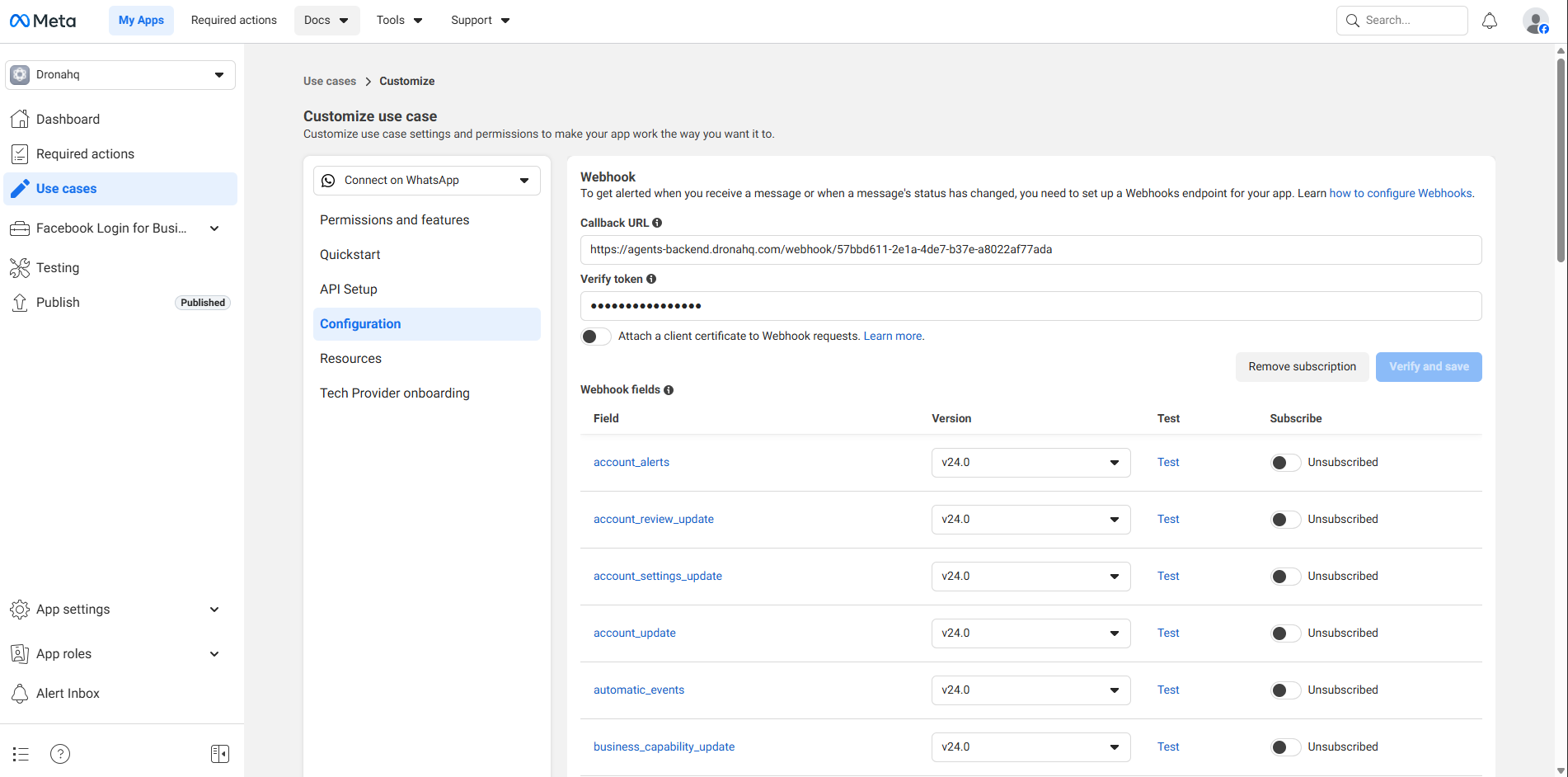
WhatsApp Webhook Configuration - This is where Meta sends incoming WhatsApp message events

Your agent will only receive WhatsApp messages after this webhook is configured and verified in Meta.
Verify Token
A verification token used once by Meta to confirm webhook ownership.
- Copy the Verify Token from the trigger
- Paste it into Meta → Webhooks → Verify Token
- Required during webhook verification
Verified Status
Shows whether Meta has successfully verified your webhook.
- Not Verified → Webhook not connected
- Verified → Ready to receive WhatsApp messages
- Click Check status to refresh
A timestamp is shown once verification is complete.
Meta App Secret (Optional)
Used to validate webhook signatures sent by Meta.
- Found in Meta → My Apps → Settings → Basic → App Secret
- Helps ensure requests truly come from Meta
- Toggle visibility using the eye icon
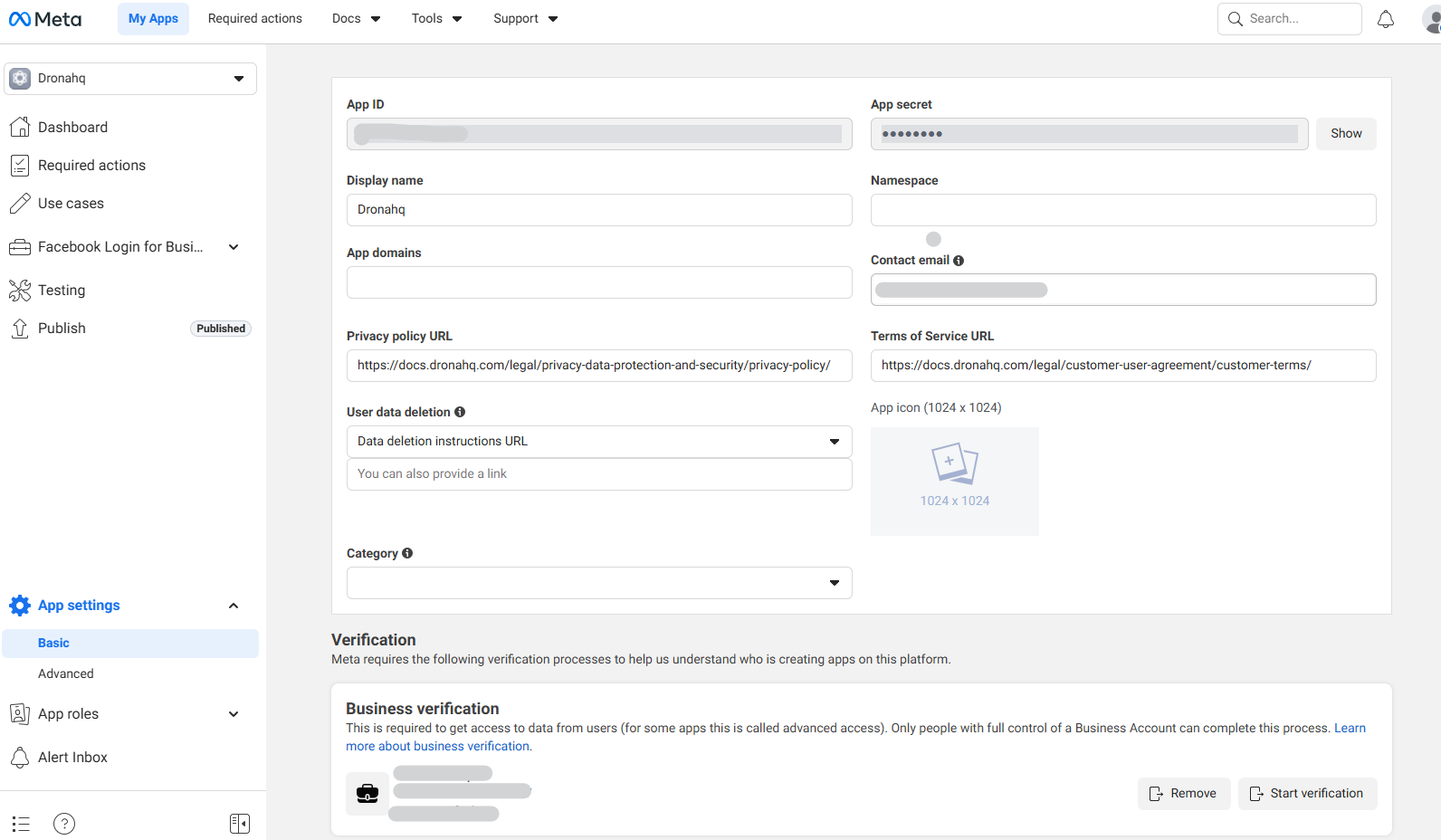
Highly recommended for production use to prevent spoofed webhook calls.
Step 3: Auto Populate Payload Data (Optional)
The Auto populate payload data from a live WhatsApp call feature helps you inspect real message payloads.
- Click Start Listening
- Send a message to your WhatsApp Business number
- The first incoming payload is captured and displayed
This helps you:
- Understand WhatsApp payload structure
- Confirm webhook connectivity
- Auto-fill input schemas
While editing an existing agent, real messages may be captured but will not execute the agent during configuration.
Step 4: Webhook Input (WhatsApp Payload)
WhatsApp messages follow Meta’s webhook structure.
Raw Input (Example)
{
  "entry": [
    {
      "changes": [
        {
          "value": {
            "contacts": [
              {
                "wa_id": "16315551181",
                "profile": { "name": "Test User" }
              }
            ],
            "messages": [
              {
                "id": "ABGGFlA5Fpa",
                "from": "16315551181",
                "type": "text",
                "text": { "body": "Hello" },
                "timestamp": "1504902988"
              }
            ],
            "metadata": {
              "phone_number_id": "123456",
              "display_phone_number": "16505551111"
            }
          }
        }
      ]
    }
  ]
}
Important Fields
Sender
contacts[0].wa_id→ WhatsApp user IDcontacts[0].profile.name→ Display name
Message
messages[0].id→ Message ID (required for replies)messages[0].type→ text, image, audio, etc.messages[0].text.body→ Message contentmessages[0].timestamp→ Time received
Metadata
phone_number_id→ Your WhatsApp Business number
Step 5: Configure Message (Agent Context)
The Message section defines what context your agent receives.
Write Tab
Use templates to extract relevant data.
Template Rules
- Use
{{...}}for placeholders - Use dot notation for nested fields
- Array indices are supported
Recommended Template
New WhatsApp message received.

From: {{entry[0].changes[0].value.contacts[0].profile.name}}
Phone: {{entry[0].changes[0].value.contacts[0].wa_id}}

Message:
{{entry[0].changes[0].value.messages[0].text.body}}

Message ID:
{{entry[0].changes[0].value.messages[0].id}}
Full Payload Option
{{$}}
Preview Tab
Shows exactly how your agent will receive the formatted message.
Use this to:
- Verify placeholders
- Confirm message text extraction
- Avoid runtime issues
Step 6: Save Configuration
- Ensure webhook is Verified
- Review message template preview
- Click Save
Once saved, incoming WhatsApp messages will trigger your agent.
Accessing WhatsApp Data in Agent Instructions
Common references:
Sender Name
{{entry[0].changes[0].value.contacts[0].profile.name}}Sender Phone
{{entry[0].changes[0].value.contacts[0].wa_id}}Message Text
{{entry[0].changes[0].value.messages[0].text.body}}Message ID
{{entry[0].changes[0].value.messages[0].id}}
Example Agent Instruction
When a WhatsApp message is received:
- Read the user's message
- Use the Message ID to reply
- Respond politely and clearly
- Maintain conversational context
Best Practices
- Verify webhook before production use
- Always store and reuse Message IDs
- Handle different message types (text, image, audio)
- Keep responses short and conversational
- Test using real WhatsApp messages
- Secure your Meta App Secret
- Monitor webhook verification status
WhatsApp Webhook Verification (Meta)
- Copy Webhook URL and Verify Token
- Go to Meta for Developers → Webhooks
- Configure WhatsApp webhook
- Subscribe to
messagesevents - Verify and save
- Confirm status in DronaHQ
Next Steps
Publish your agent
Verify webhook in Meta
Send test messages on WhatsApp
Monitor agent tracing
Combine with:
- Webhook Trigger for integrations
- Scheduler Trigger for proactive messaging